
Why the frequency matters
We hear the same frustration from Petaling Jaya residents every week. A local management office might charge up to RM400 to replace a lost key. This massive fee makes an affordable spare highly desirable, but the underlying chip completely determines whether a quick copy is possible.
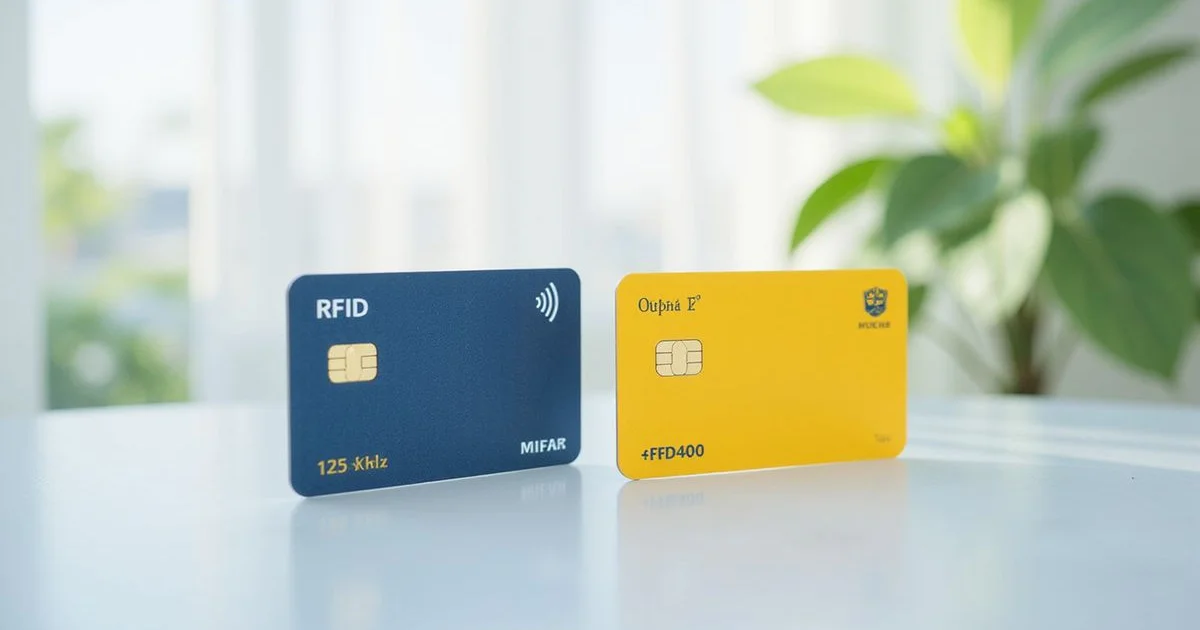
Almost every local condo or office system runs on one of two specific radio frequencies. These are 125kHz or 13.56MHz. Comparing an RFID vs MIFARE card reveals exactly what security tier you possess.
Our access card duplication service relies completely on identifying this exact frequency.
It dictates the chip family, the data capacity, and the exact encryption level securing your building. Let’s examine the hardware differences directly.
125kHz: the older, simpler standard
Cards operating in the 125kHz band are typically called low-frequency RFID prox cards. Manufacturers like HID Global produce these basic models with chips that store a static unique ID. This identifier usually contains just 26 to 37 bits of data.
We see these older credentials constantly in our workshop. They feature absolutely no native encryption, which means the reader simply checks if the static ID matches an approved list. The standard reading range requires very close contact, usually within a few centimetres of the terminal.
Common applications in Malaysia include:
- Older Petaling Jaya residential towers built before 2015
- Basic office time-attendance systems
- Early-generation parking transponders and boom gates
Strengths of the 125kHz format:
- Extremely cheap to manufacture and distribute
- Highly reliable over decades of daily use
- Readily duplicable for around RM25 to RM40 at a local hardware shop
Weaknesses you should know:
- Zero data encryption leaves the card vulnerable to basic cloning
- Highly susceptible to capture-and-replay attacks by bad actors
- No capacity to hold rich data like user balances or biometric templates
13.56MHz: the newer standard with Mifare on top
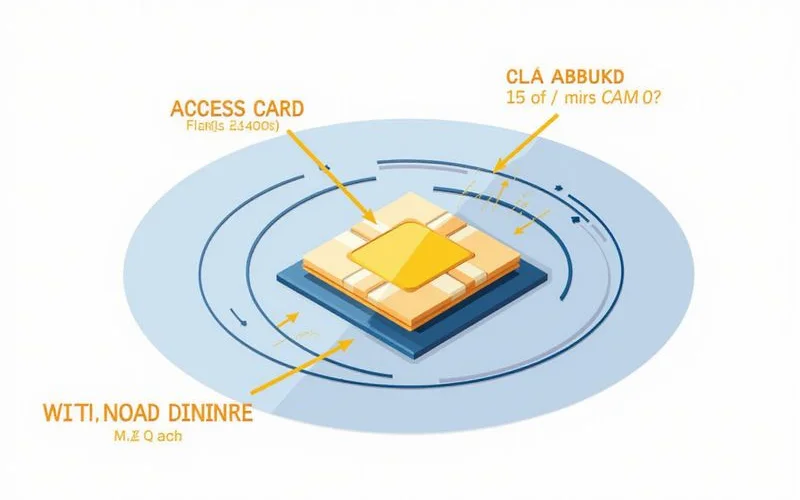
The 13.56MHz high-frequency band powers most modern security credentials across Malaysia. NXP Semiconductors developed the dominant chip family for this frequency, universally known as MIFARE. These smart cards hold significantly more data and support distinct memory sectors protected by separate cryptographic keys.
Our technicians handle these advanced chips daily. A 13.56MHz credential can process complex, banking-grade encryption and communicate with a reader up to 10 centimetres away. The Malaysian Touch ‘n Go card serves as the most famous local example of this high-frequency MIFARE technology.
Types of MIFARE technology
Building managers select different chip versions based on their security budget. Here is how the common variants compare:
| Chip Family | Security Level | Typical Petaling Jaya Use Case |
|---|---|---|
| MIFARE Classic 1K / 4K | Basic Crypto-1 encryption | Many older condo systems |
| MIFARE Ultralight | None to basic | Single-use event tickets |
| MIFARE Plus | Stronger AES-based security | Mid-tier residential upgrades |
| MIFARE DESFire EV2 / EV3 | Banking-grade AES-128 encryption | High-security corporate offices |
Common applications for 13.56MHz cards:
- Newer Petaling Jaya condominiums built after 2015
- Modern corporate office networks
- Public transport ticketing networks
Strengths of the 13.56MHz format:
- Large memory capacity for storing complex user profiles
- Advanced AES encryption prevents unauthorised duplication
- Multi-application capability allows one card to open a door and pay for parking
Weaknesses to consider:
- Hardware costs are noticeably higher for management teams
- Encrypted variants frustrate residents who just want an inexpensive spare
How to tell which you have
Identifying your exact card frequency at home takes just a little observation. The physical markings and the behaviour of the plastic key often give away the underlying technology.
We recommend trying these three identification methods:
- Check for visual brand cues. Markings like “HID Prox” or “EM4100” strongly suggest a 125kHz system. Text reading “MIFARE” or “DESFire” confirms a 13.56MHz smart chip.
- Perform a read range test. Low-frequency 125kHz hardware usually demands direct physical contact with the reader panel. High-frequency 13.56MHz versions often authenticate from a few centimetres away.
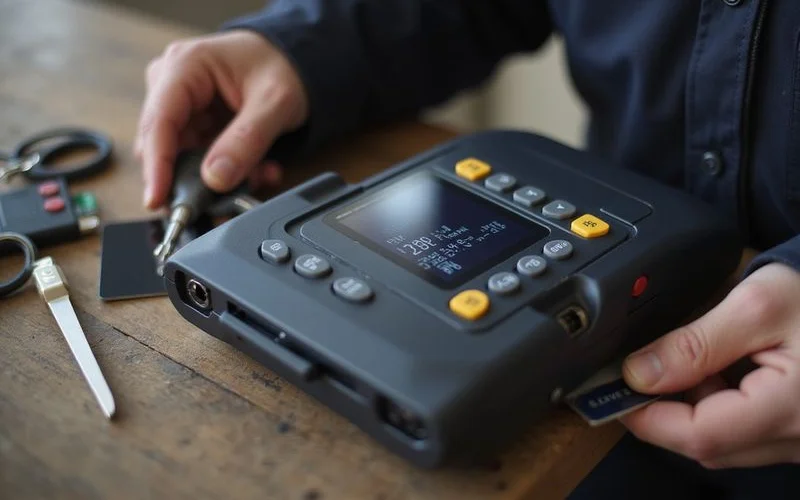
- Get a professional scan. A quick check at a dedicated hardware shop provides a definitive answer in seconds.
If you specifically want to know about cloning success rates, read our detailed guide explaining can my condo access card be duplicated.
What this means for you
Understanding your chip frequency directly impacts your options for getting a backup key. The security level of the card dictates both the time and cost involved in creating a copy.
We break down the most common outcomes for Petaling Jaya residents:
- Your card is an RFID 125kHz access card. This presents the fastest job, and it is highly likely we can duplicate it immediately for a low price.
- Your card is a basic MIFARE 13.56MHz Classic. These legacy chips are usually duplicable, though they require slightly more advanced writing equipment.
- Your card is a highly secure MIFARE DESFire. These use banking-grade cryptography and are generally impossible to clone quickly. You will likely need to pay your building management for an official replacement.
- You cannot identify the plastic tag. Bring the physical credential to a professional scanner to get a free, accurate assessment.
Why the building might choose one over the other
Property developers in Malaysia constantly balance operational budgets against site security. Older residential blocks naturally gravitated towards 125kHz hardware because the initial installation was incredibly cheap. Those basic systems proved remarkably durable, running for decades with minimal maintenance.
Modern developments face a completely different set of security threats today. High-density buildings increasingly deploy 13.56MHz MIFARE networks to utilise strong data encryption. These advanced smart chips allow management to link parking access, gym entry, and lift operations into a single digital profile.
The upgrade trade-off
Many older Petaling Jaya properties are currently replacing their aging low-frequency panels with high-frequency DESFire systems. This hardware upgrade physically stops unauthorised cloning, dramatically improving site safety. The downside is that residents lose the ability to easily cut a cheap spare key.
Our detailed breakdown on how condominium access card cloning works explains the technical side of this security shift.
WhatsApp us a clear photo of your credential if you need immediate help. We can usually identify the specific frequency and chip family straight from a good image, helping you find the right replacement fast.