
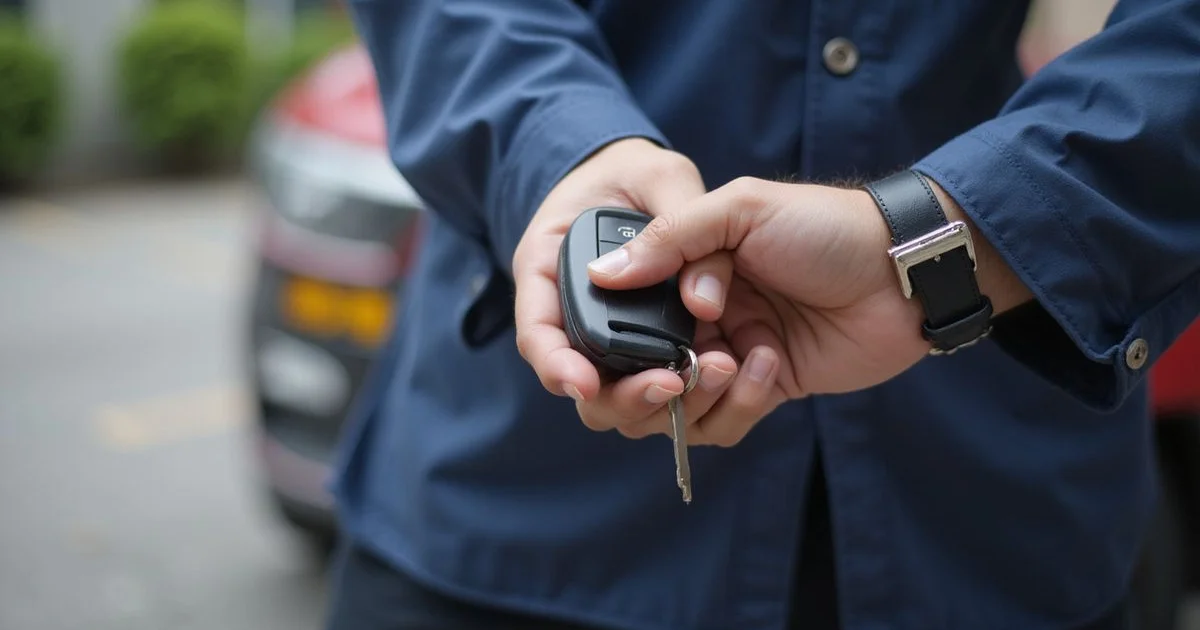
We know how frustrating it is when a vehicle remote stops responding, suddenly turning a quick errand into an urgent need for car remote fob programming in the Petaling Jaya heat. A dead fob is a common headache for many drivers today.
We see customers daily who are confused by dealership quotes for replacements. The dividing line between a quick fix and a pricey replacement depends entirely on the technology inside your key.
Our car key replacement service handles these issues every day.
Let’s look at the data, what it actually tells us about these devices, and explore practical ways to respond when your clicker fails.
Remote vs fob, what is the actual difference?
The terminology gets mixed up constantly. We want to provide the clear version:
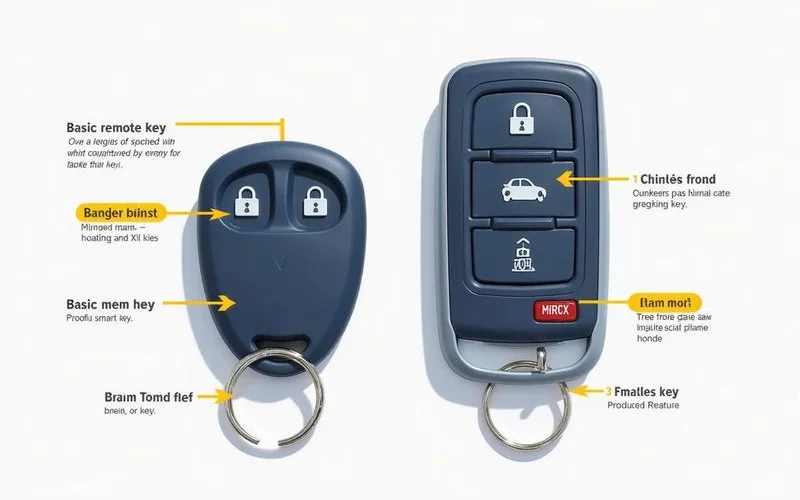
- A basic remote key has a metal blade for the door and ignition, plus a small remote section for lock/unlock buttons. You insert and turn the key to start.
- A transponder key is a basic remote key with an immobiliser chip. Most modern Malaysian market cars use this setup, adding a layer of security.
- A smart fob (keyless or proximity) replaces the metal key entirely. You keep it in your pocket, the car detects it, and a push-button start handles ignition.
Every keyless fob Malaysia drivers use today relies on advanced microchips. We frequently see drivers shocked by the price difference between these types. Replacing a basic transponder for an older model might cost between RM200 and RM500. We recommend preparing for a larger bill if you lose a modern proximity device, as replacements for vehicles like a 2026 Proton X50 often range from RM500 to over RM1500.
How car remote fob programming connects the device to your car
Pressing a button on your device sends a short radio signal carrying a unique code to your vehicle. Our technicians frequently program 433MHz units, as this is the standard for popular local models like the Perodua Myvi. The frequency might also be 315MHz depending on the manufacturer.
We verify this frequency first before attempting any new programming. The internal receiver checks the transmitted code against its memory.
We encounter two distinct types of security protocols in these devices:
- Fixed-code systems: Older models use the exact same code for every press.
- Rolling-code systems: Modern setups use algorithms like KeeLoq to change the sequence predictably every time.
Both the remote and the car keep a synchronised counter. We know this prevents simple capture and replay attacks from tech-savvy thieves.
When a fob can be re-synced
Common reasons a clicker stops working can often be resolved without buying a completely new unit. We handle these specific issues regularly:
| Problem | Fix | Estimated Time |
|---|---|---|
| Flat battery | Replace battery | 5 minutes |
| Worn buttons | Replace button rubber or circuit board | 15 minutes |
| Lost sync | Re-sync via car procedure or OBD | 20 minutes |
| Damaged casing | Transfer internal components to a new case | 15 minutes |
| Faulty transmitter | Replace with a programmed spare | 30 minutes |
Pressing the button too many times outside the vehicle’s range is a frequent cause of lost synchronisation. Our team uses specialised OBD-II diagnostic equipment, like the Autel MaxiIM or Xhorse VVDI, to rewrite the car remote pairing directly to the computer. A genuinely dead transmitter requires a brand new replacement. We program this new unit from scratch to ensure your vehicle is secure.
Keyless-go, a slightly different beast
Smart fobs allowing keyless entry are basically standard remotes paired with a transponder for proximity wakeup. Our specialists advise learning two critical details about these advanced systems:
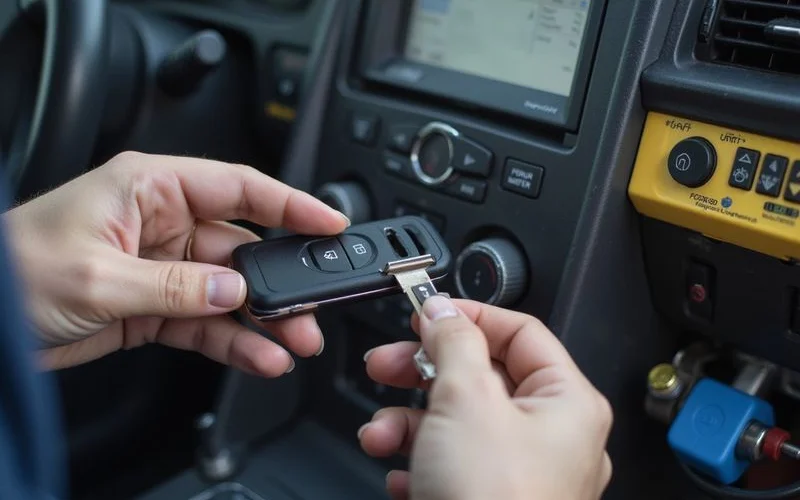
- Battery voltage is critical: A standard CR2032 coin cell typically lasts only one to two years due to constant radio polling. We notice that once the voltage drops below 2.8 volts, the push-to-start feature often fails. Most cars offer a backup detection method if the battery dies. We suggest placing the brand logo of the fob directly against the Start/Stop button, a standard override for Honda and Toyota models.
- Pairing requires specialised software: Advanced 2026 smart keys require dedicated OBD-II immobiliser programming. We cannot simply bind these sensitive units in your driveway using a manual button sequence.
Almost all units carry a hidden mechanical key inside for emergency access. Our technicians carry the latest diagnostic tools to handle these encrypted systems on site.
When to call us vs fix it yourself
Trying a few simple repairs at home can save you a trip to a Petaling Jaya dealership.
- Replace the internal battery with a fresh CR2032 or CR2025.
- Check the small LED indicator light when pressing the buttons.
- Test your spare remote to see if the vehicle’s receiver is at fault.
We recommend buying replacement coin batteries for around RM 5 at local hardware stores like Mr DIY. A lack of blinking light usually confirms a dead battery or a failed circuit board. We are ready to help if a fresh battery does not solve the problem.
Certain situations require professional intervention. We suggest calling a specialist if neither remote in your set works, which points to a receiver fault. Circuit board failure is likely if one button works while others remain unresponsive.
We often receive requests to program a spare before the primary unit fails completely. Understanding the technical process is helpful for vehicle owners.
We have a detailed resource explaining how car transponder key programming works.
Reviewing car key replacement cost in Selangor provides clear pricing guidance for local residents.
We can often diagnose your issue remotely via WhatsApp. Send us your car make and model, and we will determine if you need a quick sync, professional car remote fob programming, or a brand new unit.